
Traveling Domestically Without a Green Card: Is It Safe?
Blog post description.
2/27/202617 min read

Traveling Domestically Without a Green Card: Is It Safe?
For many lawful permanent residents, the question isn’t academic. It comes up late at night, usually after something has already gone wrong.
A wallet is missing. A purse was stolen. A move happened quickly. A card expired during a period of illness, family crisis, or financial stress. Or someone is dealing with a stack of medical bills, negotiating payment plans, and suddenly realizes they may need to travel domestically for work, family, or medical care—without having their physical Green Card in hand.
When you’re already under financial pressure, uncertainty around immigration documents doesn’t feel theoretical. It feels risky, destabilizing, and urgent.
In many cases we see, people don’t ask, “Is it technically allowed?”
They ask, “What actually happens in real life if I get stopped?”
This article is written for that exact moment.
Not from a legal theory perspective. Not from idealized government guidance. But from patterns that repeat in real-world situations—especially when people are already overwhelmed, stressed, and trying to avoid compounding problems.
We’re going to walk through this slowly, clearly, and practically.
No scare tactics. No reassurances that ignore reality. No shortcuts that leave you exposed later.
Why This Question Comes Up So Often Under Financial Stress
One pattern that repeats across many difficult situations—medical billing, debt disputes, documentation issues—is that stress compresses timelines.
People don’t plan to travel without a Green Card. They end up there because:
A family member is hospitalized in another state
A job requires short-notice domestic travel
A medical appointment or procedure is scheduled out of state
A move happens faster than expected
A card is lost while dealing with unrelated crises
In practice, this often happens when someone is already juggling medical bills, insurance denials, or income disruption. When resources are stretched thin, replacing documents can fall behind until travel becomes unavoidable.
Understanding what is likely versus what is possible matters here.
The Core Question, Stripped Down
Let’s clarify the exact issue:
Can a lawful permanent resident travel within the United States without carrying their physical Green Card?
And more importantly:
What risks show up in real situations—not just on paper?
What the Law Says (Briefly, Without Legal Jargon)
Federal regulations require lawful permanent residents to carry proof of status at all times.
That proof is typically the physical Green Card.
However, domestic travel within the U.S. is not the same as international travel. You are not crossing a border. You are not presenting yourself for admission to the country.
This distinction matters—but it does not eliminate risk.
In theory:
You do not lose lawful permanent resident status by traveling domestically without the card.
There is no automatic penalty for simply being without it.
In practice:
Encounters with authorities are rarely theoretical.
The outcome often depends on where, how, and why your status is questioned.
That’s where reality diverges from simple yes/no answers.
Airports, TSA, and What Actually Gets Checked
TSA Is Not Immigration—but That’s Not the Whole Story
At airport security checkpoints, Transportation Security Administration (TSA) officers are primarily concerned with identity and security—not immigration status.
You do not need a Green Card to pass through TSA security for a domestic flight.
You need acceptable identification.
This typically includes:
A valid state-issued driver’s license
A state ID
A passport (foreign or U.S.)
Certain other federally recognized IDs
If you have valid photo ID, TSA generally does not ask about immigration status.
In many cases we see, people travel domestically without their Green Card and encounter no issues at all at TSA.
But that’s not the full picture.
Secondary Issues That Create Risk at Airports
Problems tend to arise not from TSA screening itself, but from secondary interactions, such as:
Random law enforcement presence
Immigration enforcement actions at airports
Travel disruptions leading to identity questions
Name mismatches or database flags
Prior unresolved immigration or criminal issues
Airports are federal spaces. Multiple agencies operate there.
While uncommon, we do see cases where:
Law enforcement asks additional questions
Someone is referred to another agency
Identity cannot be fully verified on the spot
When you have your Green Card, these situations usually resolve quickly.
When you don’t, they can become stressful, time-consuming, and unpredictable.
Domestic Travel by Car: Lower Visibility, Different Risks
Many people assume driving is safer because there’s no formal checkpoint.
Often, that’s true.
But here’s what we see most often in real situations.
Traffic Stops Are the Most Common Trigger
Most problems arise after:
Speeding stops
Equipment violations
Accidents
DUI checkpoints (in some states)
If you are stopped and asked for identification, officers are typically focused on:
Driver’s license
Registration
Insurance
Immigration status does not automatically come up.
However, if:
You cannot provide valid ID
There are discrepancies
The stop escalates
You are in a jurisdiction with closer cooperation with federal immigration authorities
Then lack of proof of lawful status can matter.
What Happens When Immigration Status Is Questioned
In practice, this often happens when:
A person appears nervous or confused
There is difficulty confirming identity
The officer runs a check and sees incomplete records
If you have a Green Card, this is usually resolved quickly.
If you don’t:
Verification may take longer
Additional questioning may occur
Detention, while rare, becomes more plausible
Again, this is not about guilt or wrongdoing. It’s about documentation friction.
Traveling Without a Green Card vs. Traveling With Alternative Proof
Is a Copy of Your Green Card Enough?
A photocopy or photo of your Green Card does not replace the original.
However, in many real-world interactions:
It can help establish credibility
It can speed up verification
It can reduce suspicion or confusion
We often see better outcomes when someone has:
A copy of their Green Card
A foreign passport
A state ID
Evidence of residence (lease, utility bill)
None of these are substitutes—but they are stabilizers.
What About a Passport With an Immigrant Visa Stamp?
Some people still have:
An immigrant visa stamp
An I-551 stamp
Older documentation from adjustment of status
These can help in certain contexts, but they are not universally recognized by non-immigration officers.
In practice, they reduce risk but do not eliminate it.
What We See Most Often in Real Negotiations (and Why It Applies Here)
In medical bill negotiations, one pattern repeats constantly:
The person with documentation and clarity controls the interaction.
The same is true here.
When someone lacks:
Clear proof
Organized records
A calm explanation
The system becomes less predictable.
People often ask, “What are the chances something happens?”
That’s the wrong frame.
The better question is:
If something does happen, how exposed am I?
Common Mistakes Patients—and Travelers—Make Under Stress
Across medical billing and documentation issues, stress leads to similar errors.
Mistake #1: Assuming “It’s Probably Fine” Is a Plan
In many cases we see, people rely on anecdotes:
“My friend did it.”
“I’ve done it before.”
“They never check.”
This works—until it doesn’t.
And when it doesn’t, the cost is emotional, not just logistical.
Mistake #2: Traveling During Active Replacement Without Backup
If your Green Card is lost or expired and you’ve filed to replace it, you may feel reassured.
But receipts and pending applications are not proof of status to most officers.
They help—but only partially.
Mistake #3: Waiting Until After Travel to Fix the Underlying Problem
This mirrors what we see with medical bills.
People delay action because:
They’re overwhelmed
They hope it resolves itself
They don’t know where to start
Delay increases exposure.
Patterns That Repeat Across Bureaucratic Systems
Whether it’s hospital billing departments or immigration documentation, similar patterns show up:
Systems assume documentation, not explanations
Frontline staff follow scripts
Exceptions require escalation
Escalation takes time
Time under stress feels much longer than it is
When you don’t have your Green Card, you are relying on system goodwill, not system design.
Situations Where Traveling Without a Green Card Is Riskier
Based on real-world outcomes, risk increases when:
You have prior immigration complications
You have unresolved criminal or civil issues
You are traveling through or stopping in high-enforcement areas
You lack other strong forms of ID
Your name or records have inconsistencies
Risk is cumulative.
Situations Where People Usually Travel Without Issues
Conversely, we often see smooth travel when:
The person has a valid state ID or driver’s license
There are no prior enforcement flags
Travel is routine and uneventful
Interactions are limited to TSA only
The person is calm and organized
This does not mean “safe.”
It means lower friction.
Emotional Reality: Why This Feels Bigger Than It “Should”
If you’re reading this while dealing with medical bills, debt, or financial strain, this question may feel overwhelming.
That’s normal.
Documentation issues threaten:
Stability
Mobility
Work
Family obligations
In practice, this often triggers the same emotional response we see when a large medical bill arrives unexpectedly: fear of the unknown.
Clarity reduces that fear.
Practical Decision Framework: Should You Travel or Wait?
Ask yourself:
Is the travel optional or unavoidable?
Do I have valid photo ID?
Do I have any alternative proof of status?
Do I have unresolved legal or immigration issues?
What happens if I am delayed, questioned, or stopped?
If the downside risk is high and the trip is optional, waiting is usually the calmer choice.
If the trip is unavoidable, preparation matters more than optimism.
What Preparation Looks Like in Real Terms
Preparation is not about guarantees.
It’s about reducing exposure.
In practice, that means:
Carrying multiple forms of ID
Keeping copies of key documents
Knowing how to explain your situation calmly
Avoiding unnecessary risks during travel
Fixing the underlying documentation issue as soon as possible
Why Replacing a Green Card Is Not Just Administrative
People often underestimate this step.
They treat replacement as paperwork.
In reality, it’s about regaining control.
Just like resolving a medical bill removes background anxiety, replacing your Green Card removes a constant low-level risk from daily life.
Final Thought Before We Talk About Next Steps
Traveling domestically without a Green Card is often uneventful—but not risk-free.
The absence of immediate consequences does not mean safety.
What matters is not whether something will happen, but how exposed you are if it does.
Clarity is the antidote to stress.
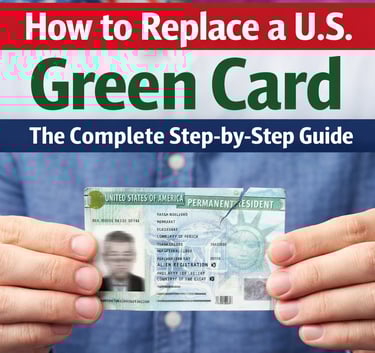
Taking Back Control: How to Replace a U.S. Green Card
If your Green Card is lost, stolen, damaged, or expired, the most stabilizing move is to replace it.
Not because disaster is imminent—but because uncertainty drains energy you need elsewhere.
Many people dealing with financial strain already feel behind.
This is one area where catching up restores control.
A clear, step-by-step guide to How to replace a U.S. Green Card can help you:
Understand timing and sequencing
Avoid common mistakes that cause delays
Reduce stress during travel and daily life
Move forward with clarity instead of worry
The goal isn’t perfection.
It’s stability.
When you remove background risks, you free up mental space to deal with the things that actually matter—your health, your finances, your family, and your future.
And in practice, that peace of mind is often worth far more than the paperwork itself.
If you want a calm, structured explanation of the replacement process—written for people under real-world pressure—that’s where to start.
Not to rush.
Not to panic.
But to regain control, one clear step at a time.
When systems feel overwhelming, clarity is leverage.
And leverage changes outcomes—whether you’re negotiating a hospital bill, or deciding whether it’s safe to board your next domestic flight without that small but powerful piece of plastic that proves who you are and where you belong in this country, especially when the last thing you need right now is another unresolved uncertainty hanging over you while you’re trying to keep everything else from unraveling at the same time, because once documentation slips, it rarely stays isolated, and what begins as a simple delay can quietly expand into missed opportunities, added stress, and unnecessary risk if you don’t bring it back under control before it compounds into something much harder to unwind later when you’re already stretched thin and trying to hold together responsibilities that don’t pause just because a card went missing or expired and no one warned you how quickly that gap could start affecting everyday decisions you never expected to second-guess until now.
continue
…now.
When Travel Isn’t Optional: Real-World Scenarios That Force the Decision
In practice, the most difficult situations are not discretionary trips. They are moments when saying “I’ll wait until I replace my card” is not realistic.
We see this most often when:
A parent, child, or spouse is hospitalized out of state
A specialized medical provider is only available across state lines
A job requires sudden in-person attendance or site work
A court appearance, government appointment, or family emergency arises
Someone is relocating quickly due to housing or financial pressure
In these cases, the question shifts from “Is it safe?” to “How do I minimize damage if something goes wrong?”
This is the same mental shift we encourage with medical bill negotiations: you don’t control the system, but you can control your exposure.
What Actually Triggers Deeper Scrutiny (And What Usually Doesn’t)
One pattern that repeats across bureaucratic systems is this:
Scrutiny increases when something breaks the expected flow.
Travel itself is rarely the issue. Disruptions are.
Events That Often Escalate Situations
Missed or delayed flights that cause rebooking
Lost identification mid-trip
Accidents or traffic incidents
Behavioral stress that reads as evasive or confused
Inconsistent answers due to fear or exhaustion
In many cases we see, the documentation problem is not the starting point—it becomes relevant only after something else has already gone wrong.
That’s why calm preparation matters more than memorizing rules.
The Psychological Component: How Stress Changes Outcomes
This is something we observe repeatedly in medical billing disputes and it applies here directly.
People under stress:
Speak faster
Over-explain
Contradict themselves
Apologize unnecessarily
Offer information that wasn’t asked for
None of this is intentional. It’s human.
But systems are not designed for emotional context.
When officers, agents, or staff sense uncertainty, they default to procedure.
Procedure takes time.
Time increases fear.
Fear worsens communication.
It’s a feedback loop.
Having resolved documentation breaks that loop before it starts.
Temporary Proof, Receipts, and Pending Applications: How They Are Actually Treated
Many people ask whether filing to replace a Green Card “protects” them during travel.
In practice, here’s how this usually plays out.
Filing Alone Does Not Equal Proof
A receipt notice (such as a filing confirmation) shows intent, not status.
Most non-immigration officers:
Are not trained to interpret USCIS forms
Cannot verify application status on the spot
Will not treat pending paperwork as authoritative
In many cases we see, receipts help only after escalation, not at first contact.
This is similar to medical billing disputes where a pending appeal doesn’t stop collections unless someone actively intervenes.
When Temporary Evidence Does Help
Temporary evidence tends to help when:
Combined with other strong ID
Presented calmly and clearly
The situation is otherwise routine
The officer is willing to verify through additional channels
But it remains discretionary.
Discretion is never something you want to rely on under stress.
Domestic Travel by Bus, Train, and Other Carriers
Air travel gets the most attention, but many people travel domestically via:
Amtrak
Greyhound or regional bus services
Rideshare or carpooling
Private vehicles over long distances
These modes usually involve less formal ID checks.
However, they also often involve:
Stops in multiple jurisdictions
Border-adjacent areas
Random enforcement activity
In practice, the lack of formal screening reduces frequency of issues—but not severity if one arises.
Border-Adjacent States: A Special Risk Category
This is a critical nuance many people miss.
Domestic travel near international borders carries higher exposure, even if you do not intend to cross.
This includes areas near:
The southern border
The northern border
Certain coastal regions
In these zones, immigration enforcement activity is more common.
We often see confusion when people assume “domestic” equals “low enforcement everywhere.”
That’s not how jurisdiction works in practice.
If you must travel without your Green Card, avoiding unnecessary travel through border-heavy zones reduces risk.
Common Myths That Create False Confidence
Myth #1: “I’ve done it before with no problem.”
Past outcomes do not predict future interactions.
Different officer.
Different day.
Different context.
The same applies to medical bills that were forgiven once and denied the next time.
Myth #2: “They only care if you cross the border.”
Immigration enforcement authority exists well inside U.S. territory.
While routine checks are uncommon, authority is broader than many people assume.
Myth #3: “If something happens, I can explain later.”
Explanation works best when documentation exists.
Without it, “later” can involve:
Delays
Detention
Missed obligations
Emotional distress
Even if everything eventually resolves, the interim cost can be high.
Why This Matters Even If You “Get Away With It”
This is a subtle but important point.
In many cases we see, people travel multiple times without their Green Card and nothing happens.
But the psychological load accumulates.
They:
Avoid certain trips
Drive extra hours to avoid airports
Turn down opportunities
Live with constant low-grade anxiety
This mirrors what happens when someone ignores medical bills until collections begin. The stress compounds quietly.
Replacing the card removes that background noise.
Timing Matters: When to Replace Before It Becomes Urgent
One of the most common patterns we see—across many systems—is reactive timing.
People wait until:
Travel is imminent
A problem occurs
Stress peaks
At that point, options narrow.
Processing times feel longer when you’re watching the calendar.
Replacing your Green Card early is not about paranoia. It’s about preserving flexibility.
What People Regret Most After a Close Call
When we speak with people who had a difficult encounter traveling without documentation, the regrets are remarkably consistent:
“I should have replaced it sooner.”
“I didn’t realize how exposed I was.”
“I thought it was a small issue.”
“The stress wasn’t worth it.”
Very few say, “I’m glad I waited.”
The Parallel With Medical Billing Stress (And Why It’s Relevant)
You might wonder why someone who has helped patients navigate medical billing stress sees such a clear parallel here.
Because both systems operate the same way:
They assume compliance
They penalize gaps
They escalate silently
They drain energy over time
And in both cases, clarity restores power.
When patients understand their bills, they negotiate better.
When residents resolve documentation, they move more freely.
A Calm Reality Check
Traveling domestically without a Green Card is not inherently illegal.
But legality is not the same as safety.
Safety is about:
Probability
Consequence
Your tolerance for disruption
If your life is otherwise calm, the risk may feel manageable.
If you are already under financial or emotional strain, adding uncertainty rarely helps.
Choosing the Least Stressful Path Forward
There is no universal answer that fits every person.
But in practice, the least stressful path is usually the one that reduces future decision-making.
Replacing your Green Card does exactly that.
It removes:
Second-guessing
Route planning around fear
Hesitation to travel
Anxiety during routine interactions
It turns a question mark back into a period.
Returning to Control: How to Replace a U.S. Green Card (The Right Way)
If your Green Card is lost, stolen, damaged, or expired, replacing it is not just a formality—it’s a stabilizing move.
A clear, step-by-step guide to How to replace a U.S. Green Card helps you:
Understand what triggers delays and how to avoid them
Sequence steps correctly so you don’t create new problems
Prepare documentation calmly instead of under pressure
Restore confidence in everyday travel and identification
Avoid compounding stress during an already difficult period
This isn’t about rushing or panicking.
It’s about removing an unnecessary variable from your life.
When you are already managing medical expenses, income uncertainty, or family obligations, you don’t need another system holding leverage over your time and peace of mind.
Replacing your Green Card restores that leverage to you.
Not with promises.
Not with guarantees.
But with clarity, preparation, and control.
And in real life, control is often the most valuable currency you can have when everything else feels uncertain, because once you eliminate background risks, you make better decisions across the board—about travel, work, health, finances, and timing—without that constant internal calculation of “what if something happens,” which quietly drains focus and energy until even simple choices feel heavier than they should, and resolving one foundational issue like this can have an outsized impact on your ability to move forward steadily instead of reactively, especially during periods where stress is already testing your capacity to handle surprises, and the last thing you need is a preventable documentation gap dictating how freely you can live your day-to-day life in a country where stability should not hinge on a missing card once you know how to replace it properly and on your own terms.
continue
…properly, without letting urgency force mistakes that create new problems later.
How People Accidentally Make Things Worse While Trying to “Be Careful”
One pattern that repeats across hospital billing departments also shows up here: people try to protect themselves, but end up increasing exposure because they don’t understand sequencing.
In practice, this often happens when someone:
Files the wrong form because they rushed
Submits incomplete documentation to “get something on file”
Assumes an expired card is equivalent to no card
Tries to travel while a replacement is pending without understanding limits
Relies on verbal reassurance instead of written confirmation
None of this is reckless. It’s stress-driven.
But bureaucratic systems don’t reward effort—they reward accuracy.
Expired vs. Lost vs. Stolen: Why the Distinction Matters
From the outside, these situations feel identical: you don’t have a valid Green Card in hand.
Internally, the system treats them very differently.
Expired Green Card
In many cases we see, people assume expiration equals loss of status.
That’s not true.
Lawful permanent resident status does not automatically end because a card expires.
However:
An expired card is weak proof of status
Many institutions treat it as invalid ID
Travel becomes more stressful than it needs to be
This is especially common among people who delayed renewal due to medical issues, caregiving responsibilities, or financial pressure.
Lost or Stolen Green Card
This creates a different problem set.
Without the physical card:
You lose your primary proof of status
Replacement becomes urgent if travel is needed
Stress increases because the loss feels sudden and uncontrolled
In practice, this is when people most often ask about domestic travel safety.
Damaged Green Card
This is the most underestimated scenario.
A card may be:
Cracked
Faded
Partially unreadable
People often continue using it until a problem arises.
Then they discover it’s functionally unusable at the worst moment.
The Replacement Process: Why People Get Stuck
Many people delay replacement not because they don’t want to fix it, but because they’re unsure where the traps are.
This mirrors what we see with medical billing appeals.
The fear is not the task—it’s making the wrong move.
Common sticking points include:
Unclear eligibility categories
Confusion about fees
Fear of triggering scrutiny
Worry about processing times
Concern about travel during replacement
Understanding the process removes most of that fear.
Why “I’ll Do It Later” Is the Most Expensive Option
Delay feels harmless.
In practice, delay costs more—emotionally and logistically.
We see this clearly in billing disputes:
The bill grows
Collections escalate
Options narrow
With Green Cards, delay leads to:
Restricted travel
Increased anxiety
Forced decisions under pressure
Missed opportunities
Replacing early preserves optionality.
Travel During Replacement: What Actually Happens
This is one of the most common follow-up questions.
In many cases we see, people travel while a replacement is pending and have no issues.
But here’s the nuance:
They usually also have:
Strong alternative ID
No prior complications
Calm, routine travel circumstances
Travel during replacement is not prohibited—but it is not ideal.
The risk is not constant. It spikes during unexpected interactions.
Why Risk Feels Uneven (And Why That’s Dangerous)
Some people travel multiple times with no issue.
Others have one trip that turns stressful quickly.
This unevenness creates false confidence.
It’s similar to medical bills that “usually get adjusted” until one doesn’t.
Variance is not safety.
The Emotional Toll of Living in “Workaround Mode”
One thing people rarely anticipate is how much mental energy this consumes.
Living without a Green Card often means:
Carrying document copies everywhere
Rehearsing explanations
Avoiding certain routes or trips
Feeling tense during routine stops
This background stress mirrors what we see when patients leave bills unresolved “for now.”
Eventually, “for now” becomes exhausting.
Why Replacing the Card Is an Act of Self-Stabilization
This is not about compliance for its own sake.
It’s about removing friction from your life.
When documentation is resolved:
Travel becomes routine again
Decision-making simplifies
Stress drops noticeably
Attention returns to higher priorities
In many cases we see, people are surprised by how much lighter things feel once the card is replaced.
Control vs. Luck: The Core Difference
Traveling without a Green Card often “works” because nothing goes wrong.
Replacing your Green Card works because you no longer depend on luck.
Systems reward preparation, not hope.
When People Finally Decide to Act
The trigger is often:
A close call
A near miss
A story from someone else
An upcoming unavoidable trip
At that point, urgency spikes.
Acting earlier is calmer—but acting at all is what matters.
The Right Mindset for Replacement
Approach this the way you would approach a complex medical bill:
Don’t panic
Don’t rush blindly
Don’t ignore it
Follow a clear sequence
Keep records
Reduce exposure step by step
This mindset consistently leads to better outcomes.
Reclaiming Normalcy
Most lawful permanent residents want the same thing:
To live normally
To travel when needed
To work without second-guessing
To handle emergencies without fear
A valid Green Card supports all of that quietly.
When it’s missing, everything feels louder.
Final Reframe: This Is Not About Fear—It’s About Capacity
If your life is currently stable, you might tolerate the risk.
If your life is already under strain—medical bills, income changes, family stress—your capacity for additional uncertainty is lower.
Reducing uncertainty is a rational move.
One Last Time, Clearly and Calmly
Traveling domestically without a Green Card is often uneventful.
But uneventful is not the same as safe.
Safety comes from:
Preparation
Documentation
Reduced exposure
Restored control
Replacing your Green Card is the cleanest way to achieve all four.
Moving Forward With Clarity: How to Replace a U.S. Green Card
If your Green Card is lost, stolen, damaged, or expired, learning How to replace a U.S. Green Card gives you back something that stress quietly erodes: confidence.
A clear guide helps you:
Understand timing realistically
Avoid unnecessary mistakes
Prepare calmly instead of reactively
Travel domestically without constant second-guessing
Focus on health, work, and family instead of paperwork anxiety
This isn’t about being alarmist.
It’s about being intentional.
When systems feel unpredictable, clarity is grounding.
And grounding yourself—especially during periods of financial or emotional strain—has a ripple effect far beyond travel.
It steadies decision-making, lowers baseline stress, and restores a sense of normalcy that’s hard to quantify until it’s gone.
Replacing your Green Card doesn’t solve every problem.
But it removes one that doesn’t need to exist.
And in practice, that’s often the difference between navigating challenges with resilience versus feeling like everything is just one more thing away from tipping over, because once you eliminate unnecessary risk, you stop spending energy managing “what ifs” and start using it where it actually helps—on recovery, stability, and forward movement—without the constant background fear that a missing document could suddenly turn a routine domestic trip into an avoidable ordeal at exactly the moment you least need one.
Help
Questions? Reach out anytime for support.
Contact
infoebookusa@aol.com
© 2026. All rights reserved.